
Padel courts and permitted developments: An opportunity for farm diversification?
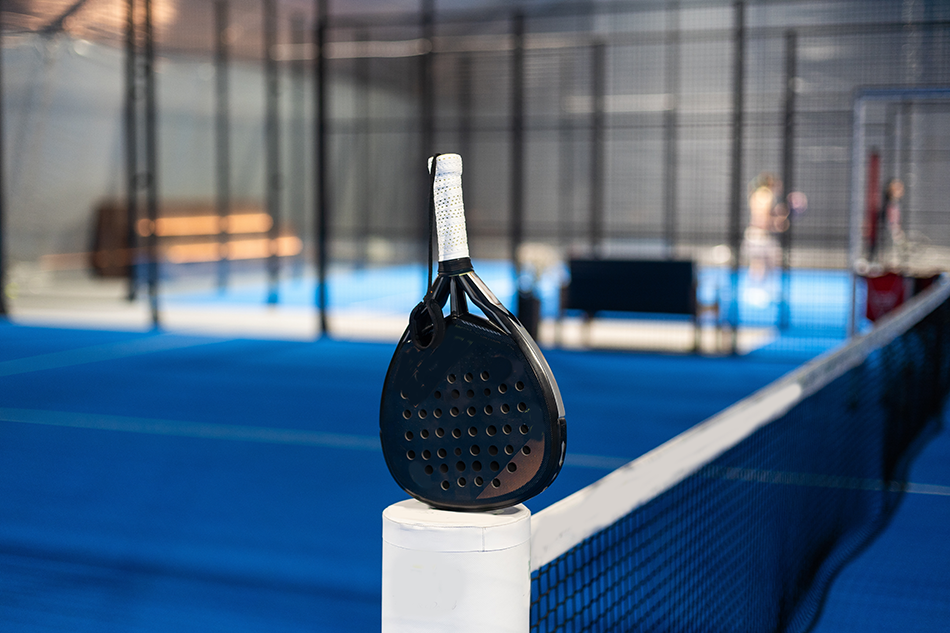
The UK's love affair with padel continues to grow, with record numbers around the UK taking up the sport. For those uninitiated, padel is a racket sport and often described as a hybrid between tennis and squash. It is played on a smaller tennis-type court with a net, but within the walls of an enclosed squash court. The sport is both highly accessible and very sociable, which are major reasons for its growing success!
The Lawn Tennis Association (LTA) estimated that over 400,000 people in the UK played padel at least once last year, and 2026 is set to be another big year for padel in the UK, with London hosting Britain’s first-ever Premier Padel tournament later this year. Sports commentators are hopeful that this will encourage further grassroots participation in padel, in both cities and rural communities.
Kieran Woonton, solicitor in Muckle LLP's construction and engineering team, has previously explored different legal areas to consider when considering padel court development.
Despite the increase in padel courts in the UK, the surge in padel's popularity means demand still outweighs court availability. Ross Galbraith and Hannah Hunt explore more, in collaboration with specialist planning consultants, Padel Plan.
Farm diversification:
The challenges faced by farmers in the UK have led many in the sector to explore diversification into non-agricultural uses for their land and property.
Embarking on a diversification project can be daunting, particularly when deciding how best to repurpose your property while navigating complex legal obligations.
The potential demand for padel presents an exciting opportunity to bring sports to local communities and diversify income. While planning permission is almost always required for a diversification project, the extension of ‘Permitted Development Rights’ for agricultural properties could simplify the planning process and should be considered before making a planning application.
Whether you are converting an unused agricultural property or developing land, construction activities are at the heart of any diversification project and should be considered from the outset, to ensure that your padel court is a hit!
Permitted development rights:
Planning permission must be acquired before carrying out a development on land or property.
A development includes building work, engineering, mining, or other operations, as well as making a material change to the use of a building or land.
However, ‘Permitted Development Rights’, as prescribed in the Town and Country Planning (General Permitted Development) (England) Order 2015 (‘the GDPO’), provide a deemed grant of planning permission for developments which meet specific criteria. In such cases, a full planning permission application is not required, avoiding associated costs and potential delays.
Class R of the GDPO allows certain existing agricultural buildings to be converted to a flexible commercial use without the need to submit a traditional planning application. This includes conversion from an agricultural building to an indoor sports facility, to be visited by members of the public.
To benefit from permitted development rights under Class R, the building must comply with the following conditions:
- The building must have been used solely for agricultural use on 3 July 2012, or if the building was not in use on that date, when it was last in use; or
- If the building was brought into use after 3 July 2012, then the building must have been used solely for agricultural purposes for a period of at least 10 years before the date of your development and diversification.
- The cumulative floor space of the building, which will change in use under Class R, cannot exceed 1,000 square metres.
Permitted development rights are subject to strict application and criteria; therefore, it is important to check with a planning advisor before commencing with your development.
So, where should you start?
1. Check: Is your building big enough?
According to the International Padel Federation (FIP), the internal playing area of a doubles padel court should be 10 metres wide by 20 metres long, a singles court should be 6 metres wide by 20 metres long. Courts which do not meet the dimension requirements can be used for casual play, but not competitively. These measurements do not consider any outer play area.
Padel is played within enclosed walls, which are integral to the game itself. The walls should encompass the entire court, and the ceiling height should be no less than 6 metres tall.
2. Consult a planning advisor:
Be sure to consult a planning advisor before commencing your development to ensure that you understand the necessary requirements and that all of the permissions are obtained.
3. Formally appoint consultants and a building contractor:
Once you have the relevant permissions in place, you should be ready to convert! Consider formally appointing any consultants, as well as a contractor under a building contract.
4. Remember, legal advice:
Seeking the right legal advice is key to delivering your project on time and within budget. Construction lawyers are essential members of your diversification project team and can help ensure that your padel court is a success.
For more information, please contact Ross Galbraith (Partner) via 0191 211 7999 or [email protected] or Kieran Woonton (Solicitor) via 0191 211 7820 or [email protected].